

Table of Contents
- Is Online Therapy Actually Effective? What the Research Shows
- Online Therapy vs In-Person Therapy: Where Each One Wins
- Does Online Therapy Work for Anxiety and Depression?
- The Therapeutic Alliance: Does Connection Survive a Screen?
- How to Know If Therapy Is Working
- How to Choose an Online Therapist
- Limitations, Crisis Care, and When Remote Therapy Isn’t Enough
- Frequently Asked Questions
Last Updated: October 18, 2026
Is Online Therapy Actually Effective? What the Research Shows
Yes, online therapy is effective for many people and many conditions. The strongest evidence covers anxiety and depression, where remote care often matches in-person results. This guide from The Truism Center walks through what the research actually supports, where the evidence thins out, and how to judge whether virtual care is working for you.
The short answer: online therapy works, but “works” depends on the condition, the format, and the fit between you and your therapist. Below, we break down the evidence honestly, including the parts most guides skip.
How Teletherapy Works in Practice
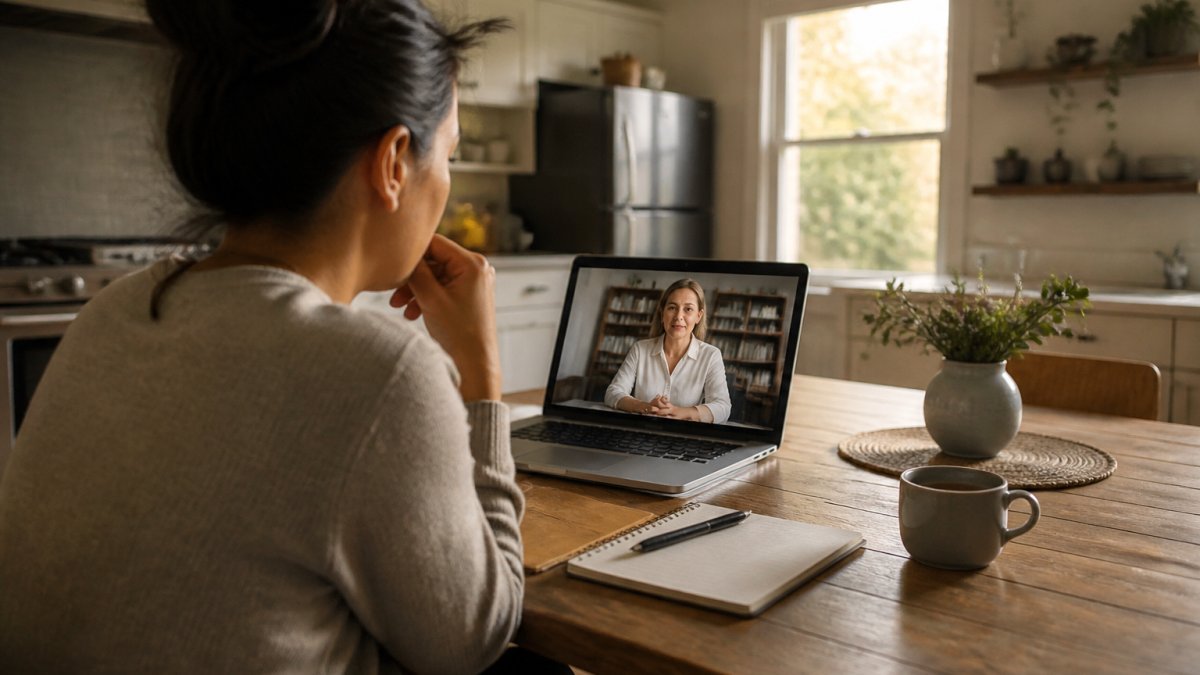
Teletherapy is mental health treatment delivered through a secure video, phone, or messaging platform instead of an office visit. A licensed clinician runs the session the same way they would in person: assessment, treatment planning, and ongoing psychotherapy.
The mechanics are simple. You book a session, join a video room, and talk with your therapist. Sessions usually run 45 to 60 minutes. Many practices also offer phone sessions and secure messaging between visits.
What changes is the setting, not the clinical method. A licensed psychologist doing cognitive behavioral therapy over video is still doing cognitive behavioral therapy. The American Psychological Association’s telehealth guidance notes that telemental health follows the same clinical standards as in-office care.
The Evidence on Clinical Outcomes
The research base for virtual mental health care has grown steadily. A review of telehealth research from the National Institutes of Health found that remote psychotherapy produces outcomes comparable to in-person care for several common conditions, with high patient satisfaction.
That said, “comparable” is not “identical for everyone.” A common mistake is reading one positive study and assuming online therapy is the best option for every diagnosis. It isn’t. The evidence is strongest for some conditions and thinner for others, which we cover below.
Online Therapy vs In-Person Therapy: Where Each One Wins
Neither format wins across the board. In-person therapy has an edge in certain situations, and online therapy has real advantages of its own.
Here is how they compare:
| Factor | Online Therapy | In-Person Therapy |
|---|---|---|
| Access | Works from home, no commute | Requires travel to an office |
| Scheduling | More flexible, easier to fit around work | Limited to office hours |
| Anxiety and depression care | Strong evidence | Strong evidence |
| Severe or high-risk symptoms | May not be suitable | Often preferred |
| Privacy | Depends on your home setup | Private, dedicated room |
| Continuity when you move | Easier to keep the same therapist | May require a new provider |
The practical takeaway: online therapy wins on access, convenience, and flexibility. In-person care wins when symptoms are severe, when a physical exam matters, or when your home is not a private place to talk.
For people who live far from a clinic or juggle a demanding schedule, remote sessions often mean the difference between getting care and getting none. That access advantage is not a small thing.
Does Online Therapy Work for Anxiety and Depression?
Yes. Anxiety and depression are the conditions with the strongest evidence for online therapy, and video-based cognitive behavioral therapy is the most studied format.
Conditions and Populations With the Strongest Evidence
The research consistently supports remote care for:
- Depression, including mild to moderate cases
- Anxiety disorders, such as generalized anxiety and panic symptoms
- Adjustment challenges, like stress from a major life transition
- Adults of working age, who benefit most from flexible scheduling
Symptom reduction and treatment adherence in these groups tend to be solid. Many patients also report high satisfaction with the convenience.
Where the Evidence Is Weaker
The picture blurs for a few groups and situations:
- Severe or acute crises, where in-person monitoring matters
- Conditions needing physical assessment, like some medication management decisions
- Young children, who often need a parent present and a room built for play-based work
If you are unsure where you fall, a licensed clinician can assess treatment suitability before you commit. At The Truism Center, our team builds a personalized treatment plan around your specific situation rather than applying one format to everyone.
The Therapeutic Alliance: Does Connection Survive a Screen?
The therapeutic alliance is the working bond between you and your therapist. It predicts outcomes as reliably as almost anything else in mental health treatment.
Does it survive a screen? For most people, yes. Research reviews suggest that a strong therapeutic alliance forms over video at rates similar to in-person care (pubmed.ncbi.nlm.nih.gov). What most guides miss is that the alliance depends far more on the therapist’s skill than on the medium.
That said, connection can suffer when the technology gets in the way. Lagging video, bad audio, or a therapist who seems distracted erode trust fast. If the bond feels weak after a few sessions, say so. A good clinician will adjust, and a mismatch is worth addressing early rather than enduring for months.
How to Know If Therapy Is Working
Progress in therapy is measurable, and you should expect to see it. Here is how to evaluate it:
- Symptom tracking: Are your anxiety or depression symptoms easing week to week?
- Function: Are you sleeping, working, and connecting with people more easily?
- Insight: Do you understand your patterns better than you did a month ago?
- Alliance: Do you feel heard and respected by your therapist?
A common sign of trouble is a plateau that lasts several weeks with no change in symptoms or insight. That is your cue to raise it in session and, if needed, adjust the treatment approach or the fit.
Ask your therapist directly: “What are we measuring, and how will we know this is working?” Clinicians who track outcomes with brief symptom scales can show you progress in numbers, not just impressions.
How to Choose an Online Therapist
Choosing well matters more than choosing fast. The right fit drives outcomes; the wrong one wastes time and money.
Start with credentials and licensing. Then check the platform’s privacy practices. Then, and only then, worry about convenience.
Licensing, Privacy, and Platform Checks
Run through this checklist before your first session:
- Is the therapist licensed in your state?
- Does the platform use encrypted, HIPAA-compliant video?
- Is there a clear privacy policy covering session records?
- Can you confirm the therapist’s specialty matches your needs?
- Is there a plan for crisis situations?
- Do you have a private, quiet space for sessions?
Licensing requirements matter because a therapist must be licensed where you are located, not where they are. Privacy matters because real-world settings introduce risks: shared homes, thin walls, and unsecured Wi-Fi. Use headphones and a private room when you can.
Skipping the crisis plan is the mistake we see most often. Ask upfront what happens if you need urgent help between sessions. Without a clear answer, you are exposed when it matters most.
If you are LGBTQIA+ and have had poor experiences with therapists before, ask directly about a clinician’s training and comfort with identity exploration. A non-judgmental environment is not a bonus; it is a baseline requirement.
Limitations, Crisis Care, and When Remote Therapy Isn’t Enough
Online therapy has real limits, and honesty about them serves you better than a sales pitch. The most important limit is not convenience or connection. It is what remote care can and cannot do when someone is in danger or needs hands-on assessment. Establishing clear boundaries regarding these clinical constraints remains a necessary prerequisite before booking virtual therapy.
What Remote Care Can and Cannot Do in a Crisis
Remote therapy is designed for ongoing outpatient treatment, not emergency response. A video session can help you recognize warning signs, build a safety plan, and stay connected between visits. It cannot send someone to your home, physically intervene, or provide the immediate supervision that an emergency setting can.
That distinction matters because crises are exactly when the format gap is widest. If you are having thoughts of harming yourself or someone else, are in acute distress, or are experiencing symptoms that need close monitoring, remote therapy is not the right channel in that moment. For urgent situations, call or text 988 to reach the Suicide and Crisis Lifeline, or go to your nearest emergency room. Online therapy is not a crisis service, and no platform should pretend otherwise.
A good remote provider will make this explicit before you start. Ask what the plan is if you need urgent help between sessions, who covers when your therapist is unavailable, and how the practice coordinates with local emergency services. A vague answer is a warning sign.
When In-Person or Higher-Level Care May Be Preferable
Remote care may not be enough when:
- You are in an acute crisis or having thoughts of self-harm
- Your symptoms are severe enough to need close monitoring or frequent check-ins
- A physical exam or medication adjustment requires in-person review
- You need a level of care beyond outpatient therapy, such as intensive outpatient or partial hospitalization
- Your home is not a safe or private place to talk
- You need a formal evaluation that depends on observing your full presentation in person
These are not failures of online therapy. They are situations where the setting itself is part of the treatment. A clinician who assesses you honestly should be willing to say when remote care is the wrong fit, at least for now.
How Suitability Is Assessed
Suitability is not a single yes-or-no question. Most practitioners weigh symptom severity, risk history, support system, privacy at home, technology access, and the nature of the treatment approach. A structured assessment at the start, and periodic review as treatment progresses, is what separates careful remote care from a rushed intake.
If you are unsure where you fall, a licensed clinician can assess treatment suitability before you commit. At The Truism Center, our team builds a personalized treatment plan around your specific situation rather than applying one format to everyone.
For everyone else, the question is fit. Many people thrive with virtual care. Some need in-person treatment, at least for a season. A good provider will tell you which group you are in rather than pushing a format that does not serve you.
Frequently Asked Questions
Is online therapy as effective as in-person therapy?
For many common concerns, including depression and anxiety, research reviews generally find online therapy produces comparable symptom reduction to in-person care. Video sessions in particular deliver psychotherapy with similar structure, homework, and clinical assessment. The gap widens for certain situations: severe symptoms, active crisis, or conditions that benefit from direct observation. Online therapy is best understood as a strong option for many people rather than a universal replacement, and a licensed clinician can help you decide which format fits your needs.
Does online therapy work for anxiety?
Yes, for many people. Cognitive behavioral therapy delivered by video has been studied extensively for anxiety, and trials generally show meaningful symptom reduction. What matters most is the treatment approach and the fit with your therapist, not whether the session happens on a screen. If anxiety is severe, includes panic that makes remote sessions difficult, or comes with safety concerns, a clinician may recommend in-person care or a blended approach. Progress tracking, such as a symptom scale reviewed every few weeks, helps confirm whether it is working for you.
Who may not be a good fit for online therapy?
Online therapy may not suit people in active crisis, those who need urgent psychiatric stabilization, or individuals whose safety requires close in-person monitoring. Some children and adolescents do better in person, and certain assessments require direct observation. Privacy can also be a barrier if you lack a confidential space. A licensed clinician can assess treatment suitability during an intake and recommend in-person care, crisis services, or a hybrid plan when remote sessions are not the right fit.
How can I tell whether online therapy is working?
Look for measurable change, not just how you feel after a single session. Common signs include reduced symptom scores on a standard measure, better sleep, improved daily functioning, and progress toward goals you set with your therapist. Ask your clinician to review outcomes every few weeks. If you see little change after a reasonable course of treatment, discuss adjusting the approach, the modality, or the therapist fit. Deciding to change care is a normal part of treatment, not a failure.


