

Table of Contents
- How Chronic Anxiety Differs From Everyday Stress
- Grounding Techniques for Anxiety That Work in the Moment
- Lifestyle Changes for Anxiety Relief That Actually Stick
- Digital Detox and Screen Time Management for Anxiety
- Workplace Accommodations and Financial Stress
- When to See a Therapist for Anxiety
- Building a Long-Term Plan for Managing Chronic Anxiety
- Frequently Asked Questions
Last Updated: September 27, 2026
How Chronic Anxiety Differs From Everyday Stress
Chronic anxiety is a persistent, ongoing state of heightened worry and physical tension that lasts for months or longer, while everyday stress is a temporary response to a specific event or deadline. This distinction matters because the two require different approaches, and treating one like the other often makes things worse.
Grounding Techniques for Anxiety That Work in the Moment
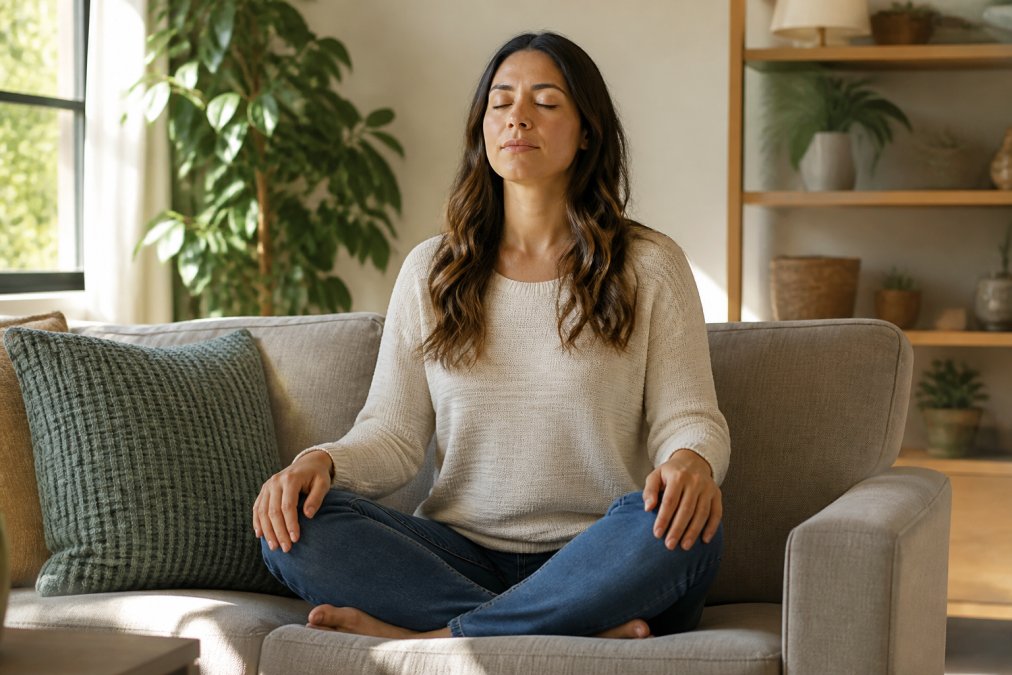
Grounding techniques for anxiety are sensory or cognitive exercises that pull your attention out of a spiral and back into the present moment. They work because anxiety lives in the future (“what if…”) while your five senses only exist right now. But there is a second layer most guides skip: grounding calms your mind, while nervous system regulation calms your body. Chronic anxiety usually needs both, because a body stuck in fight-or-flight will keep regenerating anxious thoughts no matter how many times you count to five.
The 3-3-3 Rule and Other Quick Reset Tools
The 3-3-3 rule is a fast grounding technique: name three things you can see, three sounds you can hear, and three parts of your body you can move. It takes under a minute and works in a meeting, on a train, or mid-argument.
Other tools that hold up in practice:
- 5-4-3-2-1: Five things you see, four you feel, three you hear, two you smell, one you taste
- Temperature shift: Hold something cold, or run cool water over your wrists
- Feet on floor: Press both feet down and describe the sensation in detail
- Category naming: List five animals, five cities, five foods starting with “B”
Moving Beyond Breathing: Nervous System Regulation
This is the part most articles leave out. Your nervous system has a brake, and it is physical, not mental. The vagus nerve runs from your brainstem through your neck, chest, and abdomen, and it is the main pathway your body uses to shift out of a stress state. You can influence it directly through the body, which is why somatic and body-based techniques often work when pure thought-based grounding does not.
Techniques worth learning:
- Physiological sigh: Two short inhales through the nose, then one long exhale through the mouth. The double inhale reinflates collapsed air sacs in the lungs, and the extended exhale is the active brake. This is one of the fastest known ways to lower acute arousal.
- Long exhale breathing: Make your exhale roughly twice as long as your inhale. A four-count in, six-to-eight-count out is plenty. The longer exhale is the mechanism, it signals safety to the nervous system.
- Cold exposure: Cool water on the face or wrists, or a brief cold shower, triggers a dive reflex that slows heart rate. Keep it short and tolerable.
- Orienting: Slowly turn your head and let your eyes rest on objects around the room without judgment. This tells an over-alert brain that the environment is safe.
- Humming or singing: The vibration engages the vagus nerve. It sounds trivial and it works.
- Progressive muscle relaxation: Tense a muscle group for about five seconds, then release, working from your feet to your face. The contrast teaches your body what “relaxed” actually feels like, which many people with chronic anxiety have genuinely forgotten.
Most people try these techniques for the first time during a panic attack and conclude they don’t work. Practice daily for two weeks while you’re calm, so the skill is automatic when you need it. Pick one mental grounding tool and one body-based tool, and rotate them.
If a body-based technique makes you feel more anxious, some people find breath focus uncomfortable at first, that is common and not a sign you are doing it wrong. Switch to orienting or cold exposure instead, and mention it to a therapist.
Lifestyle Changes for Anxiety Relief That Actually Stick
Lifestyle changes for anxiety relief work best when you stack them onto existing routines rather than building a new schedule from scratch. Small, repeatable changes beat dramatic overhauls that collapse within a week.
Sleep, Movement, and a Balanced Diet
Sleep is the foundation. A consistent wake time, dim light in the evening, and a cool room do more for anxiety than most supplements. Movement matters too, and it doesn’t need to be intense. A brisk walk most days is enough to shift stress hormones and improve sleep quality. For diet, the practical version is simple: regular meals with protein and fiber, fewer blood-sugar crashes, and more water.
Cutting Back on Alcohol and Caffeine
Alcohol and caffeine both make anxiety worse, just on different timelines. Caffeine spikes it within minutes; alcohol blunts it for an hour, then rebounds at 3 a.m. with a racing heart. If you’re serious about managing chronic anxiety, try a two-week experiment: cap caffeine before noon and skip alcohol entirely. Most people notice a difference in sleep before they notice it in mood.
Digital Detox and Screen Time Management for Anxiety
Screen time management is one of the most underrated anxiety interventions, and most guides skip it entirely. Constant notifications keep your nervous system in a low-grade alert state, and doomscrolling feeds the exact cognitive loop anxiety thrives on.
Start with three changes:
- Turn off all non-human notifications (apps, news, shopping)
- Keep your phone out of the bedroom and use a separate alarm
- Schedule two 15-minute “check everything” windows per day
Workplace Accommodations and Financial Stress
How the request actually works, step by step:
- Decide who to tell. Your manager, HR, or a designated leave coordinator. You can ask HR to keep the medical details confidential.
- Put it in writing. A short email beats a hallway conversation because it creates a record and a date.
- Describe the barrier, not the diagnosis. “I need a quieter space to reset between meetings” is enough. You are not required to name your condition.
- Propose a specific accommodation. Specific requests get approved faster than open-ended ones.
- Expect an interactive process. Your employer can ask questions and propose alternatives, but they cannot simply refuse a reasonable request.
Accommodations that commonly help with chronic anxiety:
- Flexible start times or a hybrid schedule to avoid peak commute stress
- Noise-canceling headphones or a designated quiet room
- Written instructions instead of verbal-only assignments
- Short, scheduled breaks to run a grounding technique
- Moving a desk away from high-traffic areas
- Temporary reduced hours or a leave of absence during a flare
Financial stress and anxiety feed each other in a loop. Naming the specific number you’re worried about, then building one small plan around it, reduces the free-floating dread that comes from vague worry.
Money is a quieter driver, and it deserves more than a single line. Financial stress and anxiety are tightly linked, and avoiding the bank app doesn’t reduce the worry, it just removes your sense of control. The mechanism is straightforward: an unknown number is scarier than a bad number, because your brain fills the gap with worst-case scenarios. Looking at the actual balance, even when it’s ugly, replaces an infinite threat with a finite one.
A practical sequence that most people find manageable:
- Write down the real total. Every account, every debt, one page. This is the step people avoid and the step that helps most.
- Separate what you can control from what you can’t. You can control a payment plan; you cannot control the job market.
- Pick one action per week. A single phone call to a creditor, one canceled subscription, one automated transfer. Small and repeatable beats a dramatic overhaul.
- Use free, legitimate resources. Nonprofit credit counseling and debt management plans exist specifically for this, and many are low-cost or free.
- Protect one small buffer. Even a modest automatic transfer to savings reduces the panic of an unexpected expense.
When to See a Therapist for Anxiety
You should see a therapist for anxiety when symptoms interfere with work, relationships, sleep, or daily functioning for more than a few weeks, or when self-help strategies aren’t producing change. That’s the honest threshold, and it’s lower than most people assume.
Warning signs that it’s time:
- You’re avoiding things you used to do
- Sleep has been disrupted for weeks
- Physical symptoms (chest tightness, stomach issues) are routine
- You’re relying on alcohol or substances to cope
Building a Long-Term Plan for Managing Chronic Anxiety
A long-term plan for managing chronic anxiety combines daily practices, professional support, and honest tracking. No single technique fixes chronic anxiety. The people who improve most are the ones who stack several small habits and adjust based on what’s actually working.
A simple structure:
- Daily: one grounding technique, movement, consistent sleep window
- Weekly: review what triggered you and what helped
- Monthly: check in with a therapist or support person
- Ongoing: adjust the plan as your life changes
The most common mistake is treating anxiety as a problem to solve once. Chronic anxiety is managed, not cured, and stopping your routine the moment you feel better is the fastest way to slide back.
Frequently Asked Questions
What is the 3-3-3 rule for anxiety?
The 3-3-3 rule is a grounding technique for anxiety that asks you to name three things you can see, three sounds you can hear, and three parts of your body you can move. It works by pulling your attention away from anxious thoughts and back to your immediate surroundings. You can use it anywhere: at a desk, in a car, or during a difficult conversation. Many people pair it with slow breathing to calm the nervous system faster.
What are the most effective lifestyle changes for chronic anxiety?
The most effective lifestyle changes for anxiety relief include consistent sleep schedules, regular physical activity, a balanced diet, and limiting alcohol and caffeine. Research on anxiety and behavior shows these habits support emotional regulation and stress reduction over time. Small, repeatable changes tend to work better than dramatic overhauls. Pairing these habits with coping skills like mindfulness meditation or grounding techniques gives you both daily support and in-the-moment tools when anxiety spikes.
When should you seek professional help for anxiety?
Consider seeing a therapist when anxiety interferes with work, sleep, relationships, or daily functioning for several weeks, or when self-care methods are not enough. Warning signs include panic attacks, avoiding situations you used to handle, physical symptoms like chest tightness, or relying on alcohol to cope. A licensed mental health professional can offer a proper diagnosis and a personalized treatment plan. If you are unsure, a free consultation can help you decide what level of support fits.
Can therapy really help with long-term anxiety management?
Yes. Therapy is one of the most researched approaches for chronic anxiety. Cognitive behavioral therapy, in particular, helps people identify anxiety triggers and replace unhelpful thought patterns with practical coping skills. Many people also benefit from somatic experiencing and nervous system regulation work, which addresses how anxiety shows up in the body. Therapy is not a quick fix, but it builds skills you keep for life. Combining therapy with lifestyle changes often produces the strongest, most lasting results.


