

It’s a phrase we’ve all heard at some point: “Fake it til you make it.” It’s catchy, motivating, and often given as advice when someone confesses that they feel out of place or inadequate, especially in their career.
But for someone struggling with impostor syndrome, this advice can actually be counterproductive. While it might help in the short term, this mindset can leave deeper, underlying wounds unaddressed. And building a whole career on top of a nonexistent foundation can lead to higher levels of anxiety and stress down the line. To truly overcome impostor syndrome, we need to go beyond just faking confidence. We need to understand what impostor syndrome is, where it comes from, and how to navigate through it in a way that builds long-lasting self-assurance.
What is Impostor Syndrome?
Impostor syndrome, also known as the impostor phenomenon or impostorism, is the experience of feeling like a fraud despite evidence of competence or success. This term was first coined in the late 1970s by psychologists Dr. Pauline Clance and Dr. Suzanne Imes, who identified a recurring theme in their clients—individuals who had achieved a certain level of success but could not internalize their accomplishments. Instead of attributing their success to their hard work, intelligence, or skills, they often chalked it up to luck, timing, or other external factors.
The hallmark of impostor syndrome is the fear that at any moment, someone will “find out” that you don’t really belong in your position or that you aren’t as capable as you seem. People experiencing impostor syndrome often feel like they’ve somehow deceived others into thinking they’re more competent than they really are, leading to a persistent fear of being “discovered.”
It’s important to note that impostor syndrome isn’t a formal diagnosis. Rather, it’s a collection of thoughts, emotions, and behaviors that many people experience at various stages of their careers. It’s a pervasive feeling of inadequacy that doesn’t align with external success. Whether you’re a student, a young professional, or someone at the peak of your career, feeling like a fraud at work can be a deeply isolating and distressing experience.

What Causes Impostor Syndrome?
The roots of impostor syndrome can be complex and multi-layered. Often, it stems from internalized beliefs about ourselves and our capabilities that we may not even be fully aware of. These beliefs can form early in life and may be reinforced over time by family, society, and our own internal dialogue.
- Perfectionism: Many people who experience impostor syndrome set impossibly high standards for themselves. When they inevitably fall short (as everyone does), they interpret this as evidence that they are not good enough. This drive for perfection leaves no room for mistakes, learning curves, or growth, which can intensify feelings of inadequacy.
- Family Dynamics: Early family messages can shape our self-perception in profound ways. For example, a child who is praised for being “the smart one” might feel an overwhelming pressure to always succeed (if this sounds familiar, read more about Gifted Child Syndrome here). On the other hand, someone who was labeled “the shy one” or “the quiet one” may internalize beliefs that they are less capable or less deserving of success. These early messages, even when well-intended, can contribute to impostorism later in life.
- Cultural Expectations: Cultural norms and expectations can also fuel impostor syndrome. In some cultures, there is immense pressure to achieve certain milestones, such as excelling academically, securing prestigious careers, or maintaining an outward appearance of success. This pressure can create an environment where anything less than perfection feels like failure.
- Stereotypes and Bias: Impostor syndrome is particularly common among individuals from underrepresented or marginalized groups, who may feel that they need to work twice as hard to prove themselves. Facing systemic barriers and societal stereotypes can exacerbate feelings of not belonging, contributing to the experience of impostorism.
- Self-Criticism and Fear of Failure: Many people with impostor syndrome are incredibly self-critical, focusing on their mistakes and downplaying their successes. This heightened sense of personal scrutiny can lead to a deep fear of failure, which in turn reinforces feelings of fraudulence.
Should You Really “Fake It Til You Make It”?
“Fake it til you make it” can be a tempting mantra for those struggling with impostor syndrome. The idea is simple: if you act confident and competent, eventually you’ll start to believe it yourself. On the surface, this can seem like a pragmatic approach. After all, many people who initially feel like frauds do go on to prove their worth through experience and success.
However, this strategy has its limitations. While faking confidence might help you navigate a high-pressure situation, it doesn’t address the underlying beliefs fueling your impostor syndrome. Instead of dealing with the root cause—your feelings of inadequacy—you’re simply putting a bandage over them. The core wound remains unhealed, and those feelings of being a fraud may continue to resurface, no matter how much success you achieve.
There’s also the risk that by continuously faking it, you further distance yourself from your authentic self. This disconnection can reinforce the belief that the “real you” isn’t good enough, which perpetuates the cycle of impostorism. Over time, this approach may lead to burnout, anxiety, and even depression, as you expend so much energy trying to maintain the façade.
Instead of relying solely on “faking it,” a more holistic approach involves examining and healing the core beliefs that contribute to impostor syndrome. Only by addressing these root causes can you start to build genuine confidence and a sense of belonging.
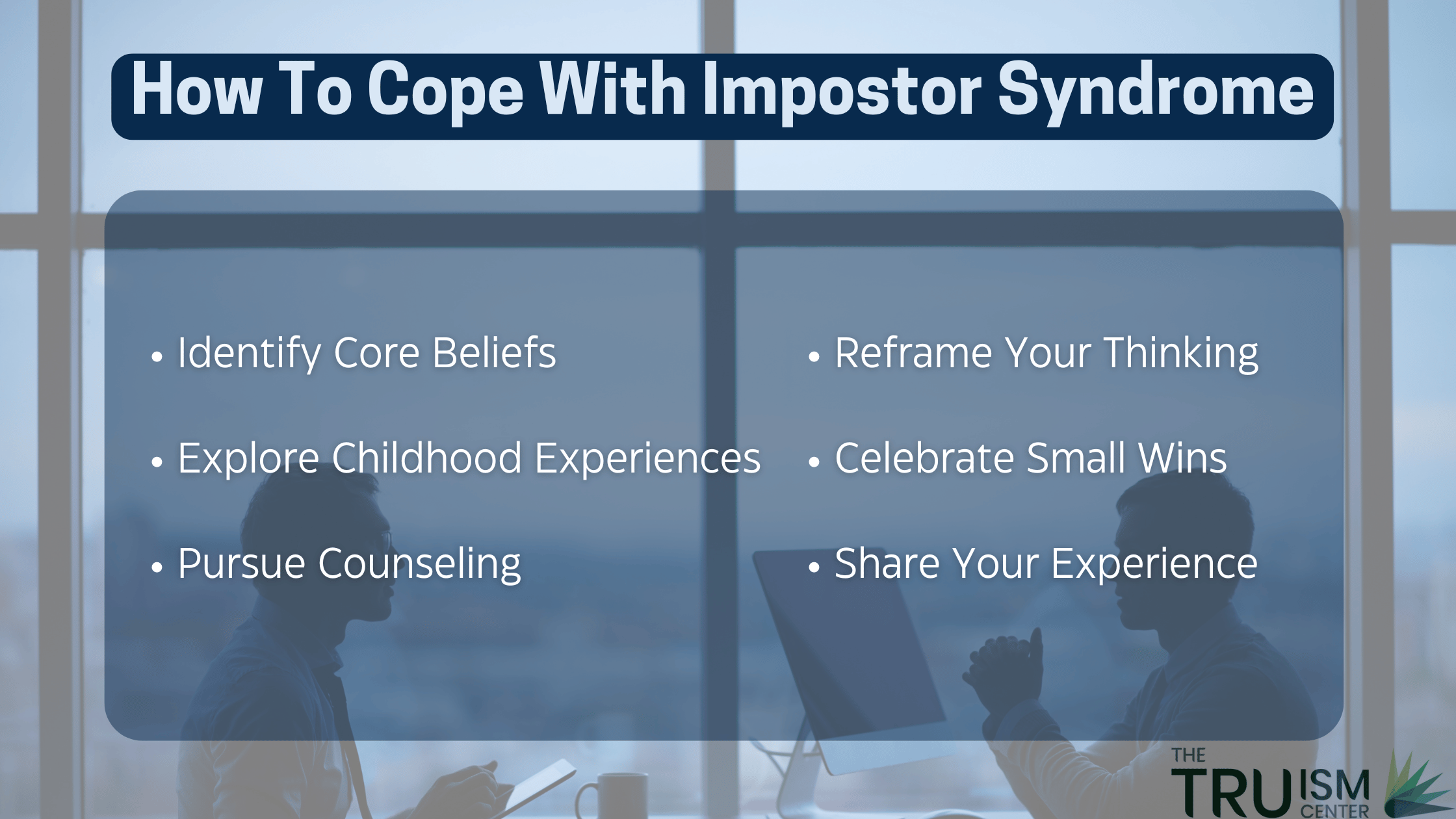
How to Cope with Impostor Syndrome
- Identify Your Core Beliefs: One of the first steps in overcoming impostor syndrome is to identify the core beliefs that drive your feelings of inadequacy. These beliefs may be deeply ingrained and difficult to recognize at first. Start by paying attention to your self-talk. Do you often say things to yourself like, “I’m not smart enough,” “I just got lucky,” or “They’re going to figure out I don’t know what I’m doing”? These thoughts are often reflective of underlying beliefs that need to be explored and challenged. Check out our blog on Negative Core Beliefs for more tips.
- Explore Childhood Messages and Early Experiences: Many of our core beliefs are formed in childhood, based on messages we received from family, teachers, or peers. Reflect on the messages you received about success, intelligence, and self-worth growing up. Were you encouraged to strive for perfection? Were you compared to others in ways that made you feel inadequate? Understanding the origins of these beliefs can help you start to untangle them.
- Work Through These Feelings in Counseling: Counseling can be an incredibly powerful tool for navigating impostor syndrome. A trained therapist can help you explore your core beliefs, understand where they come from, and work to replace them with more empowering and realistic perspectives. Therapy offers a safe space to process the emotions that come with impostorism, such as fear, shame, and self-doubt. Over time, this can help you build a more resilient and grounded sense of self. To get started, book a free consultation here.
- Reframe Your Thinking: Cognitive reframing involves shifting the way you interpret situations. For example, instead of viewing mistakes as proof that you’re not capable, try to see them as opportunities for growth. Instead of attributing your successes to luck or external factors, practice acknowledging the skills and efforts that contributed to your achievements. This shift in perspective can take time, but with practice, it can help you move from feeling like a fraud to embracing your worth.
- Celebrate Small Wins: It’s easy to focus only on big milestones, but beating impostor syndrome requires recognizing and celebrating the small wins along the way. Did you complete a challenging project? Speak up in a meeting? Receive positive feedback from a colleague? These are all successes that deserve recognition. Acknowledging these moments helps to build confidence over time.
- Connect with Others: Remember that you’re not alone in feeling like a fraud. Impostor syndrome is a common experience, especially in high-achieving environments. Sharing your feelings with trusted friends, mentors, or a support group can help normalize your experience and provide valuable perspective. Sometimes, simply knowing that others are struggling with the same feelings can be immensely validating.
Building Lasting Confidence
Impostor syndrome doesn’t disappear overnight, but by taking intentional steps to address the core beliefs driving it, you can start to build lasting confidence. While “fake it til you make it” might offer a temporary boost, true growth comes from doing the deeper work of self-exploration and healing. With time, support, and a commitment to personal growth, you can move from feeling like a fraud to recognizing and embracing your true potential.
Ultimately, overcoming impostor syndrome isn’t about never doubting yourself again. It’s about learning to recognize your worth, even when those old feelings of doubt try to creep in. By challenging your inner critic, celebrating your achievements, and working through the deeper roots of impostorism, you can move forward with greater self-assurance and a more authentic sense of confidence.
Robb Kornoelje is a practicing CBT Counselor, Relationship Counselor, owner of the Truism Center, and creator of the “30-Day Relationship Challenge.” This 30-day email course offers guidance to identify behaviors causing trouble, find ease with emotions, and enhance self-awareness. With a focus on stress-free communication, the challenge encourages a stronger connection with others, nurturing compassion, and fostering forgiveness. Join Robb on this journey to improve the fabric of your relationships—one day at a time.


